Understanding NGINX: The Powerhouse Behind the Modern Web
If you’ve ever browsed the internet (and of course you have), chances are you’ve interacted with NGINX — even if you didn’t know it. Pronounced “engine-x,” this open-source web server has become a backbone of the modern internet, quietly powering millions of websites, from personal blogs to global tech giants.
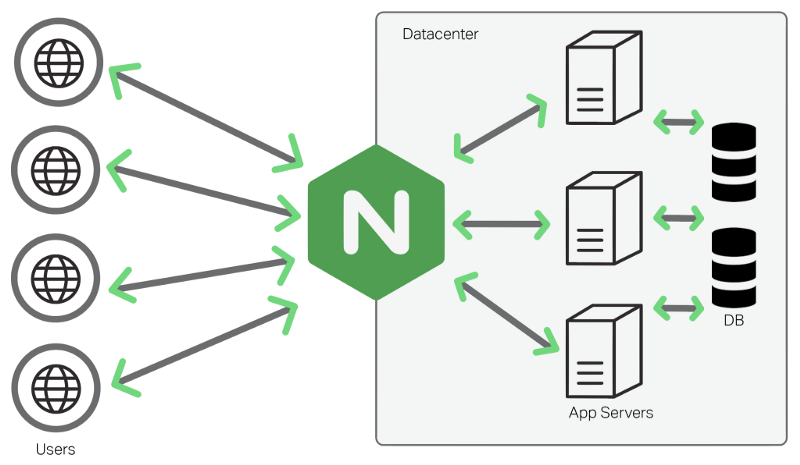
What Is NGINX?
NGINX is a high-performance web server that also functions as a reverse proxy, load balancer, and HTTP cache.
Originally created by Igor Sysoev in 2004, it was designed to solve what was known as the C10k problem — handling 10,000 or more simultaneous client connections efficiently.
Unlike traditional web servers that handle connections with a thread-per-request model, NGINX uses an event-driven, asynchronous architecture.
This makes it extremely fast, lightweight, and scalable, perfect for handling heavy traffic loads.
How NGINX Works
At its core, NGINX is built to manage concurrent connections with minimal resources. Here’s a quick breakdown:
Master and Worker Processes:
The master process handles configuration and worker management, while worker processes do the actual work — processing requests, serving files, and handling connections.Event-Driven Architecture:
Instead of dedicating one thread per request, NGINX uses non-blocking I/O, meaning it can handle thousands of requests simultaneously without using excessive memory.Reverse Proxying and Load Balancing:
NGINX can distribute incoming traffic across multiple backend servers, improving reliability, performance, and fault tolerance.
Key Use Cases for NGINX
NGINX isn’t just a web server — it’s a multi-tool for modern web infrastructure. Here’s what it’s commonly used for:
Serving Static Content
Images, CSS, JavaScript, and videos — NGINX delivers static files blazingly fast.Reverse Proxy and Load Balancer
It routes incoming requests to multiple servers, optimizing performance and reducing downtime.API Gateway
NGINX can handle authentication, rate limiting, and routing for microservice-based APIs.SSL/TLS Termination
Offload HTTPS encryption and decryption to NGINX, freeing backend servers for application logic.Caching
NGINX can cache frequently accessed content, reducing server load and speeding up responses.
Why Developers Love NGINX
- Speed and Efficiency: Handles thousands of concurrent requests using minimal memory.
- Reliability: Stable even under heavy traffic spikes.
- Flexibility: Can be used as a web server, reverse proxy, or load balancer — or all three at once.
- Easy Configuration: A simple, readable configuration syntax.
- Open Source with Commercial Support: Free to use, with an enterprise-grade version — NGINX Plus — offering extra features.
NGINX vs Apache
A common question: How does NGINX differ from Apache?
| Feature | NGINX | Apache |
|---|---|---|
| Architecture | Event-driven | Process/thread-based |
| Performance | Excellent under high load | Slower with many concurrent users |
| Static Content | Very fast | Good, but slower than NGINX |
| Configuration | Simple, declarative | More complex and flexible |
| Proxy & Load Balancing | Built-in | Requires modules |
Both are powerful, but NGINX is often preferred for speed and scalability, while Apache remains strong for complex, dynamic sites needing deep customization.
Final Thoughts
NGINX has transformed how modern web infrastructure works. Whether you’re hosting a personal blog or managing a fleet of microservices, it offers unmatched speed, stability, and flexibility.
Its open-source nature and robust community support make it an essential tool for developers and businesses worldwide.
In short:
NGINX is the silent engine that keeps the internet running smoothly.